

The hosts are gone. Within forty-eight brutal hours, the United States fell to Belgium, Mexico was edged by England in a five-goal thriller, and Canada was swept aside by Morocco.
Three nations that filled stadiums from Vancouver to Mexico City are now spectators, and they leave behind something valuable and up for grabs, tens of millions of newly neutral fans with no one to cheer for.
The eight teams still standing, France, Morocco, Spain, Belgium, Norway, England, Argentina and Switzerland, are competing for a continent’s displaced affection, and that emotional tug-of-war has a sharp edge for anyone holding a betting slip.
The question splits cleanly in two. Which team will North America fall in love with, and which team should you actually back? They are rarely the same answer. Let us take the heart first, then the head.
It is worth pausing on the scale of what just happened. All three co-hosts reaching the knockout rounds was itself a story, and all three being gone within a single week is a bigger one.
- The United States came into their Round of 16 tie against Belgium as a narrow favourite and were dismantled 4-1.
- Mexico, roared on at a heaving Estadio Azteca, traded blows with England before losing 3-2.
- Canada, the least fancied of the trio, ran into a Morocco side that simply had more, and lost 3-0.
Three fanbases, three abrupt endings, and a sudden vacuum of allegiance across the largest untapped football audience on earth.
Broadcasters know it, merchandisers know it, and the sportsbooks certainly know it. The fight for that audience is now a genuine subplot of the tournament.
Best World Cup Betting Sites

Up to $1,500 Paid Back in Bonus Bets
If You Don't Win
21+ in OH. $10 min bet req. Bonus Bets non-withdrawable, expire 7 days after receipt. T&Cs apply. Gambling Problem? Call 1-800-GAMBLER.

Get $250 in Bonus Bets
when You Bet $5 for 5 Days
21+ in OH. $5 min deposit req. Bonus Bets non-withdrawable, expire 7 days after receipt. T&Cs apply. Gambling Problem? Call 1-800-GAMBLER.

Bet $1
Get 10x Profit Boosts
21+ in OH. $1 min bet req. Profit Boosts expire 14 days after receipt. T&Cs apply. Gambling Problem? Call 1-800-GAMBLER.

Bet $5 and Get $150
in Bonus Bets, Over 14 Days
21+ in OH. $5 min bet req. New Customer Offer Token expires 7 days after offer expiration. T&Cs apply. Gambling Problem? Call 1-800-GAMBLER.

$1,000 First Bet Safety Net
or Bet $10 get $150 in Bonus Bets Win or Lose
21+ in OH. Bonus Bets expire 7 days after receipt. T&Cs apply. Gambling Problem? Call 1-800-GAMBLER.
The Anglosphere Gravitates to England
For the United States and English Canada, the path of least resistance leads straight to England. The shared language is only the start.
A generation of North American fans has grown up on the Premier League, watching Saturday-morning football with the same devotion earlier generations gave to Sunday NFL.
The badges are familiar, the players are already household names, and the emotional bridge is prebuilt. When England walk out to face Norway in the quarter-final, a huge slice of the host nations’ orphaned support will fall in behind the Three Lions almost by reflex.
There is a francophone counter-current, too. In Quebec, the natural pull runs toward France, the tournament favourite and a side carrying Kylian Mbappe at the peak of his powers.
Shared language and cultural kinship make Les Bleus the sentimental home team for French-speaking Canada, a quiet but real division in the Canadian fanbase that mirrors the country’s own linguistic map.
Mexico’s Millions and the Spanish-Speaking Dilemma
The most interesting battle is for Mexican hearts. El Tri’s exit left the single largest bloc of displaced fans in the tournament, and their loyalty will not drift toward England or France.
It will follow language and continent, which points to South America, and here the story has just shifted. Many assumed the natural second team would be Colombia, the more palatable, less threatening Latin option. But Colombia are out, edged by Switzerland in a penalty shootout, and their exit reshapes the whole equation.
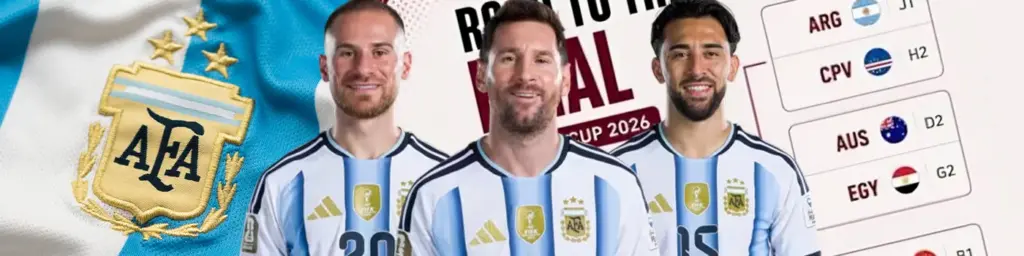
That leaves Argentina as the last major Spanish-speaking side standing, and Mexican fans face a genuine dilemma. Argentina offer the romance of Lionel Messi, at thirty-nine, now the all-time leading scorer in World Cup history, chasing one final act.
Yet Argentina also carry the weight of their own dominance, the reigning champions, the side that has spent years as the continent’s alpha. For many Mexican neutrals, cheering the giant that has so often loomed over the regional game does not come naturally.
The affection may come, but it will be conflicted, and it will never have the uncomplicated warmth Colombia might have inspired.
Morocco, the Cinderella Everyone Can Love
Then there is Morocco, the wildcard darling. The Atlas Lions have already knocked out the Netherlands and dismantled Canada, and they carry the neutral’s dream, the underdog who refuses to read the script.
In the diverse metropolitan centres of all three host nations, from the North African communities of Montreal to the global melting pots of New York and Los Angeles, Morocco command a natural and passionate following. They are the team you adopt when your own is gone and you simply want to watch something joyful.
After their semi-final run four years ago, no one is calling them a fluke anymore. Their quarter-final against France is the pick of the round, the tournament favourite against the people’s choice, and a Moroccan win would send a continent’s worth of adopted support into raptures while blowing the outright market wide open.
How would you even measure this displaced affection as it forms? The tells are everywhere. Regional polling in the days after a host exits tends to show a scramble of realignment, with neutrals splitting along exactly the lines of language, heritage and narrative sketched above.
Social-media spikes are faster still, a team that wins hearts sees its mentions and follower counts jump within hours of a marquee result, and replica-shirt sales in the host cities follow close behind.
When England beat Mexico, English-kit interest across the United States and Canada climbed almost at once. When Morocco dumped out Canada, the Atlas Lions’ shirt became one of the most-searched in three countries simultaneously. These are not just cultural curiosities.
They are the leading indicators the betting market reads too, and they are the mechanism by which sentiment quietly becomes price.
Where the Heart Goes, the Value Leaves
Here is the market reality every neutral-turned-bettor needs to understand. Sentiment moves lines.
Sportsbooks are not pricing teams purely on merit, they are pricing them on where the money is going, and when a wave of patriotic-by-proxy cash pours onto England or Argentina, oddsmakers shorten those prices to protect themselves against liability.
The very emotion that makes a team the crowd favourite is the same force that drains the value out of backing them.
Look at the current outright board.
- France sit as clear favourites around +175, with Spain near +370 and Argentina close behind around +390.
- England, despite carrying the largest slice of North American sentiment, are further out around +480, and that number is arguably still shorter than their draw against Norway and their patchy form deserve, propped up by exactly the kind of emotional money this tournament is generating.
When you back the sentimental pick, you are often paying a premium for the privilege of cheering with the crowd.
This is the heart of value betting, the discipline of asking not who will win, but whether the price is bigger than the real probability. A team can be likelier to win and still be a bad bet if the odds are too short.
Norway, the Cold Efficiency Nobody Is Watching
If the sentimental favourites are overbet, the value hides with the teams North America has no reason to love. Norway are the obvious case.
They have no meaningful diaspora across the host nations, no shared-language bridge, no Cinderella narrative to draw the neutrals, and yet they just knocked Brazil out of the tournament, with Erling Haaland scoring in his ruthless, machine-like way.
At around +1400, they are priced as afterthoughts precisely because nobody is emotionally invested enough to back them, which is exactly the condition that creates value. Their price drifts while the favourites’ prices tighten, and the gap between Norway’s real chance and their generous number is where a sharp bettor goes to work.
The same logic applies, to a lesser degree, to Belgium, another side with limited North American pull and a price out around +3000 that reflects apathy as much as ability. The point is not that Norway or Belgium will definitely win, they probably will not.
The point is that their odds are inflated by the market’s lack of affection, while England’s are deflated by a surplus of it, and over a long run of bets, backing the overlooked and fading the overhyped is how you stay ahead.
The Emotional Pick and the Smart Bet
So the two answers diverge, as they usually do. The team North America will take to its heart is most likely England, with Argentina inheriting a complicated share of Mexican support, France claiming Quebec, and Morocco charming every neutral who loves an underdog.
The team you should actually consider backing is the one nobody is talking about, Norway, whose overlooked efficiency the market keeps underpricing.
The practical move, if you want to act on this before the lines settle further, is to shop around. Prices on the same team vary from book to book, and the sentimental favourites tend to be shortest at the books with the most casual money.
Catching a number before it moves is its own edge, which is the whole idea behind line shopping. Before you place anything, it is worth running the price through an implied probability calculator to see what chance the odds are really assigning your team, then deciding whether you believe the true probability is higher. And if you want to see how the full survivor field is priced in one place, the World Cup futures market lays out the outright odds on all eight remaining nations.
The stadiums will roar for England and swoon for Morocco. The smart money, quietly, may be somewhere colder. Cheer with your heart, but bet with your head, and never let the two get confused. As ever, odds move fast and this piece is analysis rather than a tip, so gamble responsibly and only stake what you can afford to lose.