

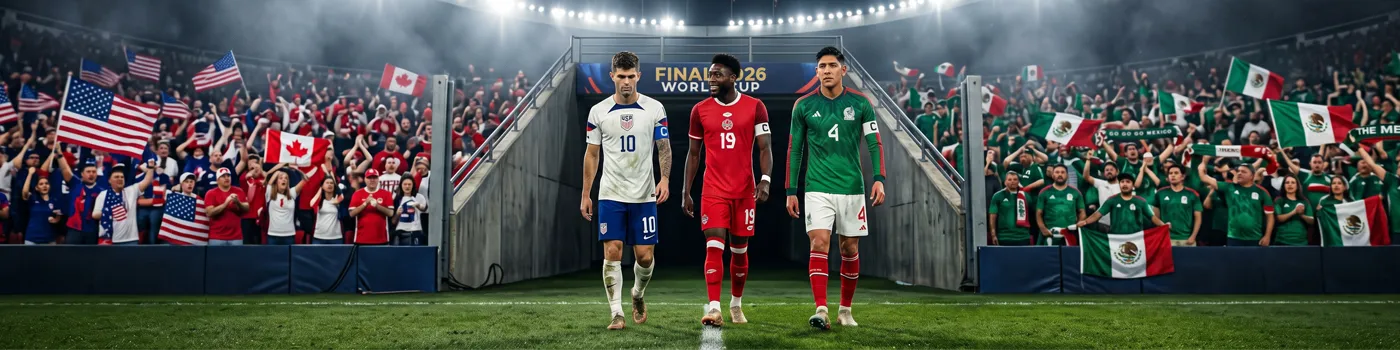
The unbeaten starts made by the United States, Mexico and Canada have highlighted the value of home advantage in the expanded World Cup. While each host nation has taken an important step toward the knockout rounds, turning early momentum into a place in the final remains a far greater challenge.
History suggests that host nations often outperform expectations when playing in familiar conditions. The support of home crowds, reduced travel demands and local knowledge have all contributed to memorable World Cup runs over the decades. Readers interested in how previous host nations have performed can explore the WC Host Countries resource.
Home Advantage Has Changed the Conversation
The strong opening performances have significantly improved USA World Cup chances and strengthened belief that at least one of the North American hosts can reach the latter stages of the tournament. The expanded 48-team format has also created a more forgiving pathway than previous editions, reducing the risk of an early exit after a single setback.
Host nations have traditionally benefited from favorable conditions, but history also provides a reality check. A review of the tournament’s champions shows that only a select group of hosts have gone on to lift the trophy on home soil. Readers can review the full list of champions through the WC Previous Winners archive.
Host Nations at a Glance
| Host | Current Picture | Key Question |
|---|---|---|
|
USA |
Strong start, favorable knockout path, growing belief around USA World Cup 2026 |
Can the bracket turn momentum into a semifinal or final run? |
|
Mexico |
Home advantage, tournament experience, pressure to break past familiar limits |
Can Mexico win the world cup against elite knockout opponents? |
|
Canada |
Fast-rising squad, athletic profile, lower expectations than its co-hosts |
Can Canada win the world cup if squad depth is tested? |
Best World Cup Betting Sites

Up to $1,500 Paid Back in Bonus Bets
If You Don't Win
21+ in OH. $10 min bet req. Bonus Bets non-withdrawable, expire 7 days after receipt. T&Cs apply. Gambling Problem? Call 1-800-GAMBLER.

Get $250 in Bonus Bets
when You Bet $5 for 5 Days
21+ in OH. $5 min deposit req. Bonus Bets non-withdrawable, expire 7 days after receipt. T&Cs apply. Gambling Problem? Call 1-800-GAMBLER.

Bet $1
Get 10x Profit Boosts
21+ in OH. $1 min bet req. Profit Boosts expire 14 days after receipt. T&Cs apply. Gambling Problem? Call 1-800-GAMBLER.

Bet $5 and Get $150
in Bonus Bets, Over 14 Days
21+ in OH. $5 min bet req. New Customer Offer Token expires 7 days after offer expiration. T&Cs apply. Gambling Problem? Call 1-800-GAMBLER.

$1,000 First Bet Safety Net
or Bet $10 get $150 in Bonus Bets Win or Lose
21+ in OH. Bonus Bets expire 7 days after receipt. T&Cs apply. Gambling Problem? Call 1-800-GAMBLER.
The United States Appears Best Positioned
The biggest reason for optimism surrounding can the USA win the World Cup 2026 is the combination of home support and a potentially favorable route through the knockout rounds. The strong start to USA World Cup 2026 has reinforced belief that this generation of American players can produce the country’s deepest tournament run in decades. Much of the discussion now centers on the USA World Cup bracket and whether the Americans can avoid meeting several traditional heavyweights until the later rounds. A manageable draw would significantly improve their chances of reaching the quarterfinals or semifinals.
Historical perspective is also important when evaluating USMNT World Cup chances. The United States has experienced both memorable breakthroughs and disappointing exits at previous tournaments. Readers can explore the country’s complete World Cup history through USA at the WC.
The next challenge will be navigating the USA World Cup round of 16, where tournament pressure increases dramatically and a single mistake can end an otherwise successful campaign.
Mexico Faces a Familiar Question
The story of Mexico World Cup 2026 has followed a familiar pattern so far. El Tri have once again demonstrated their ability to perform under pressure, supported by passionate crowds and decades of tournament experience.
Yet the central debate remains unchanged: can Mexico win the World Cup when the knockout rounds begin to feature the strongest teams from Europe and South America? While Mexico has the quality to challenge most opponents, maintaining that level over several consecutive knockout matches remains a difficult task.
Mexico’s World Cup history provides valuable context for the current campaign. Readers can learn more through Mexico at the WC.
Canada Continues to Surprise
The progress made by Canada World Cup 2026 may be the most impressive development of the tournament so far. Canada entered the competition with fewer expectations than its fellow co-hosts but has continued to show the benefits of long-term investment in player development and international experience.
The question now is straightforward: can Canada win the World Cup if the knockout bracket places the team against more experienced tournament contenders? Canada’s athleticism and confidence make them dangerous opponents, but squad depth will likely be tested as the competition progresses.
For a deeper look at the nation’s World Cup journey, readers can visit Canada at the WC.
The Favorites Still Hold the Edge
Despite the encouraging performances of the hosts, the leading World Cup 2026 favorites remain largely unchanged. Nations such as Argentina, France, Spain, Brazil and England continue to possess advantages in squad depth, tournament experience and elite-level talent.
Those factors explain why many analysts still view the hosts as contenders for deep runs rather than outright favorites. Readers interested in the latest outright markets can review Odds and Predictions here.
Why the New Format Matters?
The expanded tournament has created opportunities that were not available in previous editions. The additional teams and revised structure have increased the likelihood that strong host nations can build momentum before facing the world’s elite sides.
Supporters tracking qualification scenarios and group-stage developments can follow the latest 2026 Group Stage Odds and Predictions here.
Final Verdict
The unbeaten starts by the United States, Mexico and Canada demonstrate the power of home advantage and the opportunities created by the new tournament format. The hosts have realistic pathways to the latter stages, with the United States appearing particularly well positioned compared to many previous North American teams.
However, reaching the final remains a different challenge entirely. The traditional powers of Europe and South America continue to set the standard, and any host nation hoping to reach the final will need to combine favorable circumstances with consistently elite performances. For now, the dream remains alive, but the hardest matches are still to come.