The expanded 2026 FIFA World Cup format may create the most uneven knockout bracket modern World Cup bettors have ever seen.
With 48 teams split into 12 groups of four and a new Round of 32 feeding the knockout tree, the margin for randomness increases dramatically. One half of the draw could easily become overloaded with heavyweights like Brazil, France and Germany, while the opposite side opens unexpectedly for second-tier contenders. That imbalance creates a major World Cup 2026 knockout stage betting opportunity.
Instead of backing only tournament favourites, bettors can target a longshot emerging from the softer side of the bracket, then progressively hedge through the quarterfinals and semifinals to guarantee profit regardless of the eventual winner.
This is the “Dead Bracket Strategy” — a version of World Cup 2026 hedging strategy built around futures betting, live hedging and Dutching.
For outright futures markets and tournament odds, see the World Cup 2026 Futures Hub.
Why the 2026 Format Could Create a Lopsided Bracket
The 2026 tournament structure increases volatility immediately. Twelve groups of four still give each team three group-stage matches, but the expanded field introduces a new wrinkle: the top two from every group advance to a Round of 32 alongside the eight best third-placed teams. That third-place wildcard is where the randomness enters.
Because the specific Round of 32 matchups depend on which groups produce qualifying third-placed teams, the knockout bracket cannot be fully mapped until the group stage finishes. A team that scrapes through in third place could land on the softer side of the draw, while a group winner might immediately face another strong side that finished second elsewhere.
That matters because knockout seeding will not necessarily distribute elite teams evenly.
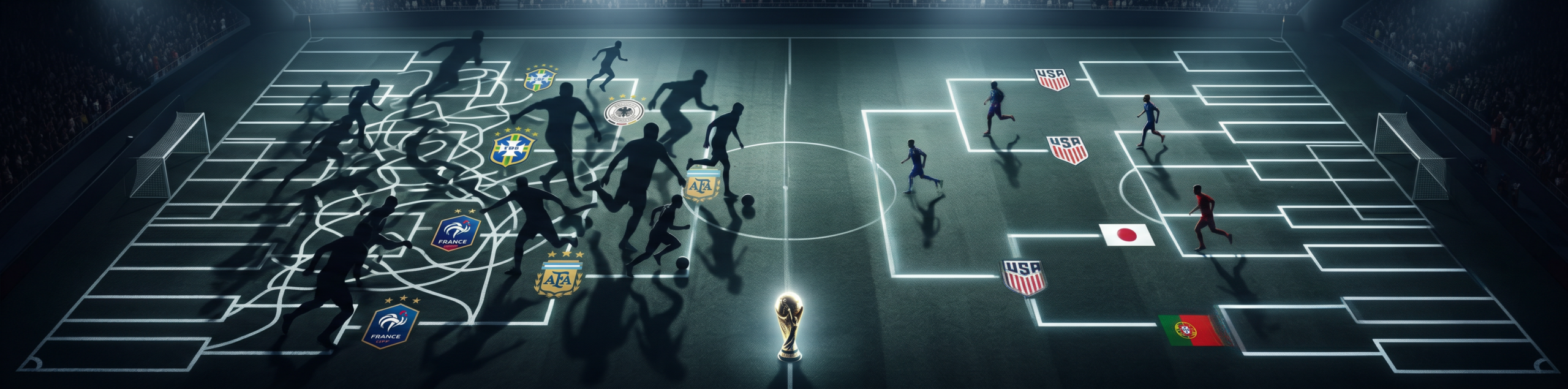
One side of the World Cup 2026 bracket could quickly become overloaded with traditional powers, while the opposite half creates an unexpectedly clear World Cup 2026 path to the final for outsiders.
With 32 teams in the knockout rounds instead of the traditional 16, there are simply more moving parts. A heavyweight nation finishing second in a difficult group could collide with another elite side in the Round of 32, while a less glamorous team benefits from weaker crossover matchups on the other side of the draw.
That is exactly how a World Cup 2026 lopsided bracket could emerge — and why bettors should pay close attention to which nations receive an easier path to World Cup final once the full knockout tree is confirmed.
Example “Dead Bracket” Scenario
| Hard Side | Softer Side |
|---|---|
|
France |
USA |
|
Brazil |
Japan |
|
Germany |
Portugal |
|
Argentina |
Mexico |
A structure like this dramatically changes futures value.
A team that might normally have only a 5–7% chance of reaching the final suddenly becomes far more dangerous if the bracket opens correctly. This is where betting psychology becomes important.
The public still tends to back traditional powers regardless of draw structure, while sportsbooks often move futures prices more slowly than live knockout markets. Sharp bettors can exploit that delay by targeting teams whose route becomes easier after the group stage finishes.
Bettors should pay close attention to which nations receive an easier path to World Cup final scenarios once the knockout bracket is confirmed.
For official tournament schedules and bracket updates, visit FIFA World Cup.
The Futures Dutching Strategy
The core idea behind World Cup futures dutching is simple:
- Take a longshot futures ticket before the tournament
- Wait for the bracket to open
- Hedge progressively during the knockout rounds
- Lock guaranteed profit before the final
This is not traditional outright betting. The goal is not necessarily predicting the champion correctly. The goal is to create a position where advancing through the softer half of the draw gives you multiple profitable hedge opportunities.
This is also the cleanest answer to how to hedge a World Cup futures bet effectively.
A bettor holding a USA +4000 ticket before the tournament does not need the United States to win the World Cup outright. They simply need them to survive long enough for the market to reprice aggressively.
Once a team reaches the semifinals, futures odds compress dramatically — especially if the bracket path has been favourable. At that point, bettors can hedge against them match-by-match and guarantee profit regardless of the result.
Example: USA at +4000
Imagine the United States men’s national soccer team enters the tournament at +4000 before kickoff. The draw breaks favourably:
- Manageable Round of 16 opponent
- No elite European giant until the semifinal
- Weaker quarterfinal section
- Heavyweights clustered elsewhere
Suddenly, the futures ticket becomes extremely valuable.
Example Hedge Structure
| Stage | USA Futures Odds | Hedge Action | Guaranteed Position |
| Pre-tournament | +4000 | Initial futures bet | High upside |
| Quarterfinals | +900 | No hedge yet | Position improves |
| Semifinals | +300 | Hedge opponent ML | Lock partial profit |
| Final | +150 | Hedge both sides | Guaranteed return |
This is where betting both sides World Cup hedge strategies become extremely powerful.
By the semifinal stage, the futures ticket itself becomes an asset rather than simply a prediction. If the USA reaches the semifinal at +300 implied probability, the bettor can:
- Hedge opponent moneyline
- Hedge qualification markets
- Hedge extra-time outcomes
- Use live betting after kickoff
The result is a position where the bracket itself has created value before the team even reaches the final.
Why Semifinal Live Betting Matters
The semifinal is usually the optimal hedge point. Earlier than that, the futures price still contains too much uncertainty. Later than that, the hedge opportunity shrinks because outright odds become compressed.
The best setup occurs when:
- the longshot reaches the semifinal
- the opponent is heavily favoured
- public money floods onto the favourite
- live prices overreact early in the match
This creates flexible live-betting opportunities. If the underdog scores first, hedge prices can shift violently within minutes. If the favourite dominates early possession without scoring, bettors can often find improved live prices on the original futures side.
This is why knockout football differs so much from league betting.
Single-elimination matches create emotional market swings that sportsbooks cannot always price efficiently in real time. Momentum, penalties, extra time and crowd pressure all increase volatility dramatically. For bettors using the “Dead Bracket Strategy,” that volatility is an advantage rather than a risk.
The Importance of Round of 16 Pricing
One overlooked angle is the World Cup 2026 round of 16 odds market itself. If a softer side of the bracket emerges early, bookmakers may still hesitate to aggressively shorten futures prices before the knockout rounds begin.
That creates a window where bettors can still take attractive outright positions before the market fully reacts. For example:
- A team finishing top of an easier group
- A favourable Round of 16 crossover
- No elite opposition until the semifinal
Those paths matter enormously in tournament football.
A nation that avoids Brazil, France and Argentina until the semifinal suddenly becomes far more valuable than a similarly rated team trapped in the difficult side of the draw.
This is where understanding the full World Cup 2026 path to the final becomes more important than simply evaluating squad quality alone.
Which Teams Could Benefit Most?
United States men’s national soccer team
The USA is the perfect example because public expectations remain moderate despite home-soil advantage and improving squad depth.
Strong athleticism, tactical flexibility and favourable hosting conditions make them a dangerous knockout opponent if the bracket opens correctly.
Japan national football team
Japan consistently outperforms market expectations in tournament football and thrives in structured knockout matches.
Their defensive discipline and tactical organisation make them especially dangerous against higher-ranked teams under pressure.
Portugal national football team
Portugal often carries enough individual talent to survive softer knockout paths while remaining priced below the true elite tier. Meanwhile, teams like France and Brazil may cannibalise each other if grouped into the same side of the bracket.
Early bracket projections and knockout simulations from ESPN Soccer World Cup Coverage can help bettors identify which nations may benefit from softer knockout paths.
Final Betting Angle
The best World Cup 2026 hedging strategy is not simply picking the winner. It is identifying which longshot has the clearest route through the softer side of the bracket and treating the futures ticket as a tradable asset rather than a static prediction.
The ideal setup includes:
- a favourable Round of 16 draw
- avoidance of elite nations until the semifinal
- compressed semifinal futures pricing
- flexible live-betting hedge opportunities
That is where World Cup 2026 knockout stage betting becomes more about bracket structure than team quality alone. Bettors looking to build this strategy should compare outright futures prices and live knockout markets before the Round of 16 begins.
Please gamble responsibly. You must be at least 18 years old to place a bet. Set a budget before the tournament and stick to it. If you need support, contact your local responsible gambling service.