


Balke Step Test
The Balke Step Test is a maximal graded step test was first described by Nagle, Balke, and Naughton in 1965. This test differs from many other step tests in that it has a gradual increase in step height and continues until exhaustion (see also other step tests for a comparison).
purpose: the purpose of this test is to determine aerobic fitness.
equipment required: automatically adjustable step (2 to 50cm), stopwatch, metronome or cadence tape (see our online metronome).
pre-test: Explain the test procedures to the subject. Perform screening of health risks and obtain informed consent. Prepare forms and record basic information such as age, height, body weight, gender, test conditions. Check step height and set metronome. See more details of pre-test procedures.
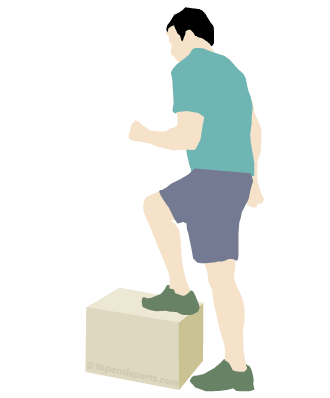 procedure: The metronome is set at 120 beats per minute, to indicate the stepping rate of 30 steps per minute (4 beats per stepping cycle). The step is set to the lowest level, 2cm. The subject steps up and down on the step in time with the metronome, leading with either leg. Each minute the step height is increased by 2cm. The test is terminated with the subject is fatigued and cannot keep up with the required stepping rate. (See also the general step test procedure).
scoring: Use the ACSM metabolic equation for stepping exercise to calculate energy expenditure (VO2max) corresponding to the step height and cadence during the final stage.
advantages: this is a maximal step test, unlike most other step tests, and therefore would give a better indication of VO2max.
disadvantages: the automatically adjustable step height is not readily available compared to the simple steps of other step tests.
comments: There is also a Balke 15 minute run test, and Balke Treadmill Test.
reference: F J Nagle, B Balke, J P Naughton, Gradational step tests for assessing work capacity, Journal of Applied Physiology. 01/08/196508/1965; 20.
Similar Tests
- General Step Test procedure, and links to other step tests.
Related Pages
- Calculating VO2max from stepping exercise.
- About a Step Test iphone app
- Video of Step tests being performed.
- Step up exercises at the beach or during pregnancy
- More information on measuring heart rate
 Any comments, suggestions, or corrections? Please let us know.
 Current Events