Upper Thigh (Gluteal) Girth Calculator
Quick Answer
This calculator measures and converts upper thigh (gluteal) girth, compares left vs right thigh symmetry, and ranks your measurement against population benchmarks based on CDC anthropometric data.
- Instant conversion between metric (cm) and imperial (inches) units
- Detects muscle asymmetry between left and right thighs
- Compares results to age and gender-matched population data
- Sport-specific benchmarks for athletes in various disciplines
What is Upper Thigh (Gluteal) Girth?
The upper thigh girth measurement, also known as gluteal thigh girth or proximal thigh circumference, is an anthropometric measurement taken at the highest point of the thigh, specifically 1 cm below the gluteal fold (buttock crease). This measurement captures the circumference of the thigh where the gluteal muscles transition into the hamstring and quadriceps muscle groups.
Girths are circumference measures at standard anatomical sites around the body. According to Robert Wood, MSc in Sports Science, "Upper thigh girth measurements provide valuable data about muscle mass distribution in the proximal leg, making them particularly useful for tracking strength training adaptations in sports like powerlifting, sprinting, and cycling."
The measurement reflects both musculature and adipose tissue composition. When combined with skinfold measurements, girth measurements provide a comprehensive picture of changes in tissue composition and the distribution of muscle and fat in the thigh region.
How to Measure Upper Thigh Girth Correctly
Purpose: To measure the circumference of the upper thigh as a measure of the underlying musculature and adipose tissue. This measurement is particularly valuable for athletes monitoring quadriceps and hamstring development.
Equipment required: Flexible metal tape measure and pen suitable for marking the skin. If a plastic or cloth tape is used, it should be checked regularly against a metal tape as they may stretch over time.
Pre-test: Explain the test procedures to the subject. Prepare forms and record basic information such as age, height, body weight, and gender. See more details of pre-test procedures.
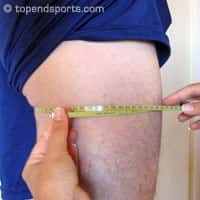
Procedure: This girth measurement is usually taken on the right side of the body. The subject stands erect with their weight evenly distributed on both feet and legs slightly parted. The circumference measure is taken 1 cm below the gluteal line or fold (buttock crease) with the tape held horizontal. When recording, you need to make sure the tape is not too tight or too loose, and is lying flat on the skin.
Pro Tip: For accurate progress tracking, always measure at the same time of day (morning is ideal), at the same anatomical landmark. Mark the measurement site with a small dot using a skin-safe marker if measuring regularly over several weeks.
Reliability: Factors that may affect reliability include changes to the testing personnel, constant and even tension on the tape, and correct landmarking (finding the correct anatomical site for measurement).
Advantages: Low costs involved in the testing procedure, ease of self-testing, and the ability to track changes over time without specialized equipment.
Comments: Clothing over the site should be removed if possible to make sure the measuring tape is positioned correctly and that the correct circumference is determined. For this girth measurement, due to the location of the measure, care should be taken to maintain personal privacy of the subject, and sometimes it is appropriate to measure over clothing. If so, this should be recorded with the results. It may help to have the subject stand on a box to make the measurement easier.
Understanding Your Results
Upper thigh girth measurements vary considerably based on age, gender, body composition, and athletic training status. According to CDC anthropometric reference data, the average adult upper thigh circumference ranges from approximately 50-55 cm (19.7-21.7 inches), with athletes in power sports often exceeding these averages significantly.
Population Benchmarks by Age and Gender
| Age Group | Male Average (cm) | Female Average (cm) |
|---|---|---|
| 20-29 | 52.8 (20.8") | 55.1 (21.7") |
| 30-39 | 54.1 (21.3") | 55.1 (21.7") |
| 40-49 | 54.4 (21.4") | 55.1 (21.7") |
| 50-59 | 53.1 (20.9") | 53.1 (20.9") |
| 60-69 | 52.3 (20.6") | 51.8 (20.4") |
| 70+ | 49.5 (19.5") | 50.0 (19.7") |
Source: CDC Anthropometric Reference Data (NHANES). Note: These are general population averages; athletes typically have larger thigh girths due to increased muscle mass.
Left-Right Asymmetry Assessment
Comparing left and right thigh measurements can identify muscle imbalances that may affect athletic performance or indicate injury risk. Research suggests that asymmetries greater than 2 cm between limbs may warrant attention from strength and conditioning professionals.
- Less than 1 cm difference: Normal variation, no concern
- 1-2 cm difference: Moderate asymmetry, monitor during training
- Greater than 2 cm difference: Significant asymmetry, consider unilateral training or professional assessment
Sport-Specific Applications
Different sports require varying levels of thigh musculature, reflected in upper thigh girth measurements. Understanding sport-specific benchmarks helps athletes and coaches set appropriate training goals.
Athlete Thigh Girth Benchmarks
| Sport | Male Range (cm) | Female Range (cm) |
|---|---|---|
| Sprinting/Track | 58-65 (22.8-25.6") | 54-60 (21.3-23.6") |
| Cycling | 56-63 (22.0-24.8") | 52-58 (20.5-22.8") |
| Powerlifting | 62-72 (24.4-28.3") | 56-64 (22.0-25.2") |
| Bodybuilding | 65-75 (25.6-29.5") | 55-62 (21.7-24.4") |
| Distance Running | 50-56 (19.7-22.0") | 48-54 (18.9-21.3") |
| Soccer/Football | 54-60 (21.3-23.6") | 50-56 (19.7-22.0") |
How to Improve Upper Thigh Girth
For athletes seeking to increase thigh muscle mass and girth, a combination of progressive resistance training and adequate nutrition is essential. Key exercises that target the upper thigh region include:
- Squats: Back squats, front squats, and goblet squats develop overall thigh mass
- Lunges: Walking lunges and reverse lunges emphasize the gluteal-thigh junction
- Hip thrusts: Target the gluteal muscles that contribute to upper thigh girth
- Romanian deadlifts: Develop the hamstrings at the proximal thigh
- Leg press: Allows heavy loading of the thigh musculature
"Consistent girth measurements every 4-6 weeks provide valuable feedback on the effectiveness of a hypertrophy training program. Athletes should expect changes of 0.5-1 cm per month during dedicated training phases."— Robert J. Wood, PhD, Founder of Topend Sports
Frequently Asked Questions
Where exactly do you measure upper thigh girth?
Upper thigh (gluteal) girth is measured 1 cm below the gluteal fold (buttock crease) with the tape held horizontal while the subject stands erect with weight evenly distributed on both feet. This landmark ensures consistent and reproducible measurements.
What is the average upper thigh circumference for adults?
According to CDC data, the average upper thigh circumference is approximately 53-55 cm (21-22 inches) for adults aged 20-49. Men average around 53-54 cm while women average 53-55 cm, with considerable individual variation based on body composition and fitness level.
How do I convert thigh girth from cm to inches?
To convert thigh girth from centimeters to inches, divide the measurement by 2.54. For example, 55 cm ÷ 2.54 = 21.7 inches. Our calculator performs this conversion automatically when you toggle between metric and imperial units.
What is a normal left-right thigh asymmetry?
A difference of less than 1 cm (0.4 inches) between left and right thigh measurements is considered normal variation. Asymmetry of 1-2 cm is moderate and should be monitored. Differences greater than 2 cm may indicate muscle imbalance that could benefit from targeted training.
How often should I measure thigh girth for tracking progress?
For accurate progress tracking during a training program, measure thigh girth every 2-4 weeks at the same time of day, preferably in the morning before training. Consistent measurement conditions are essential for detecting real changes versus normal daily fluctuation.
Is upper thigh girth different from mid-thigh girth?
Yes, upper thigh (gluteal) girth is measured 1 cm below the buttock crease, while mid-thigh girth is measured at the midpoint between the inguinal crease and the top of the patella. Upper thigh measurements are typically 2-5 cm larger than mid-thigh measurements due to the greater muscle mass at the proximal thigh.
What thigh size do professional athletes have?
Professional athlete thigh sizes vary significantly by sport. Powerlifters and bodybuilders may have upper thigh girths of 65-75 cm (25.6-29.5"), while distance runners typically range from 48-56 cm (18.9-22.0"). Sprinters and cyclists fall between these extremes at 54-65 cm (21.3-25.6").
References
- Fryar, C.D., Gu, Q., Ogden, C.L., & Flegal, K.M. (2016). "Anthropometric Reference Data for Children and Adults: United States, 2011-2014." National Center for Health Statistics, Vital Health Stat, 3(39).
- Marfell-Jones, M., Olds, T., Stewart, A., & Carter, L. (2006). "International Standards for Anthropometric Assessment." ISAK.
- Norton, K., & Olds, T. (1996). "Anthropometrica: A Textbook of Body Measurement for Sports and Health Courses." UNSW Press.
- Heymsfield, S.B., et al. (2015). "Multi-component molecular-level body composition reference methods: evolving concepts and future directions." Obesity Reviews, 16(4), 282-294.
- Cooper, R., et al. (2015). "Objectively measured physical capability levels and mortality: systematic review and meta-analysis." BMJ, 341, c4467.
- Bamman, M.M., Newcomer, B.R., Larson-Meyer, D.E., Weinsier, R.L., & Hunter, G.R. (2000). "Evaluation of the strength-size relationship in vivo using various muscle size indices." Medicine & Science in Sports & Exercise, 32(7), 1307-1313.
Similar Tests
Related Pages
- See the similar mid-thigh girth measure.
- General description of taking girth measurements, and links to other girth measures.
- Using MyoTape for girth measurement.
- A discussion about Body Size Testing
- Other anthropometric tests
- Videos of Anthropometric Tests
 Any comments, suggestions, or corrections? Please let us know.