


1-RM Tests (repetition maximum tests)
The one repetition maximum tests (1-RM) is a measure of the maximal weight a subject can lift with one repetition. It is a popular method of measuring isotonic muscle strength. Below is a description of the general procedures of the repetition max test. See the specific Bench Press, Squat, Deadlift and Lat Pulldown repetition max strength tests. There is also a power clean maximum power test. 1RM tests can also be conducted with many other strength and power exercises, such as biceps curl, shoulder press, bench pull, leg press, leg curl and knee extension.
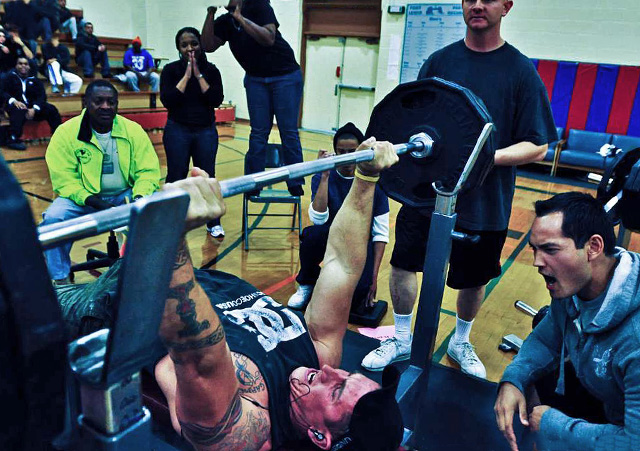 1RM bench press exercise
 purpose: to measure maximum strength of various muscle and muscle groups.
equipment required: Free weights (barbells, dumbbells) or other gym equipment.
pre-test: Explain the test procedures to the subject. Perform screening of health risks and obtain informed consent. Prepare forms and record basic information such name, age, height, body weight, gender, test conditions. Check equipment for safety and calibrate if required. See more details of pre-test procedures.
procedure: It is important to reach the maximum weight without prior fatiguing the muscles. After a warm up, choose a weight that is achievable. Then after a rest of at least several minutes, increase the weight and try again. The athletes chooses subsequent weights until they can only repeat one full and correct lift of that weight.
scoring: the maximum weight lifted is recorded. The sequence of lifts should also be recorded as these can be used in subsequent tests to help in determining the lifts to attempt. To standardize the score it may be useful to calculate a score proportional to the person's bodyweight. You can also use a calculator to estimate 1RM.
advantages: the required equipment is readily available in most gymnasiums.
disadvantages: performing a maximum weight lift is only for advanced weight trainers. It is important to have good technique before attempting this test.
comments: The test results will be specific to the equipment used and the technique allowed, so is best used for test-retest measures. The test is also called one rep max, 1-RM, one repetition maximum
variations / modifications: Sometimes a three or five repetition maximum is used, particularly for less experienced lifters. These greater reps would require less weight and may be considered less dangerous. Changing the number of repetition also changes the muscle energy systems and validity of this test.
Similar Tests
- 1RM Bench Press Test — measure of the maximal weight you can bench press with one repetition.
- 1RM Squat Test — measure of the maximal weight you can performa squat exercise.
- Repetition Max Deadlift Test — maximum lift for one squat repetition.
- Lat Pulldown 1-Rep Max Test — one-repetition max test using the lat pulldown exercise.
- Power Clean Max Lift Test— maximum weight lifted using the power clean exercise.
Related Pages
- A calculator to estimate 1RM.
- Using 80% of 1RM to estimate muscle fiber composition
- Reps in Reserve (RIR) — how many more can you do?
- Measuring body mass
- See also weightlifting techniques
 Any comments, suggestions, or corrections? Please let us know.
 Current Events