Height Prediction Calculator
Quick Answer
This calculator predicts your child's adult height using two scientifically validated methods. The Khamis-Roche method provides 90% accuracy for children aged 4-17.5 years.
- Uses parent heights and child's current measurements
- Based on peer-reviewed research from Pediatrics journal
- Provides sport-specific athletic context for results
The height that a child grows to as an adult is influenced by a number of factors, such as genetics (their parents height), sex (are they male or female), and overall health and nutrition. It is believed that genetics accounts for 70% of the adult height, while 30% comes from environmental factors, such as health, nutrition and exercise.
Although there is no way to predict the future to see how tall a child will become, the calculator above and following height prediction methods can be used to give you some idea. For athletes, proper nutrition and training during growth years is crucial for reaching genetic height potential.
See more about measuring height, baby length and standing height.
How to Use This Height Prediction Calculator
Our calculator offers two scientifically validated methods for predicting adult height. Each method has different accuracy levels and is suitable for different situations:
Mid-Parental Height Method
This simple method uses only the parents' heights to estimate the child's adult height. According to research by Robert Wood, MSc Sports Science, this method works by averaging the parents' heights and adjusting for the child's biological sex. Males typically grow taller than the mid-parental average, while females grow shorter.
The calculation adds 13 cm (5 inches) for males or subtracts 13 cm for females from the average of the parents' heights, then divides by two. This method provides a prediction with a 68% confidence interval of ±8.5 cm. While less precise than the Khamis-Roche method, it's useful when you don't have the child's current measurements.
Khamis-Roche Method (More Accurate)
Developed by Khamis and Roche (1994) and published in Pediatrics journal, this method uses the child's current height, weight, and age along with parent heights. Research shows it achieves 90% accuracy within ±5.3 cm for children aged 4 to 17.5 years.
The method is most accurate for children over 8 years old and becomes increasingly precise as children approach adolescence. For young athletes in training, this method helps coaches and parents understand growth potential for sport-specific development.
Simple and Easy (but inaccurate?) Traditional Methods
There are a couple of simple methods used to estimate a child's height potential that are commonly used but less scientific and less accurate than the formula listed below.
- Estimate adult height by adding the parents' heights together, then dividing this by two, then adding three inches (7.6 cm) for a boy or subtracting three for a girl.
- Estimate your child's height when they reach adulthood, by taking their height at age 2 and doubling it.
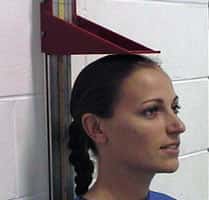 Using Formula
- Using growth charts (see height and weight growth charts)
- Based on secondary sex characteristics: Onat method (1)
- Based on menstrual age: Tanner method (2)
- Based on anthropometry and mid-parent stature:
- Modified Roche-Wainer-Thissen method (3)
- Khamis-Roche method (4). based on a child's gender, height, and weight and the height of both parents.
- Based on anthropometry: Lauren method (5)
- Based on bone age: An estimate of a child's height as an adult can be made by measuring the child's bone age (using x-ray) and chronological age. This is a common method used by pediatricians and endocrinologists. This method utilizes the work done by Greulich and Pyle in "Radiographic Atlas of Skeletal Development of the Hand and Wrist".
- Bayley-Pinneau method (6)
- Roche-Wainer-Thissen method (7)
- Tanner-Whitehouse method (8)
- Tanner-Healy method (9)
Height Prediction for Young Athletes
For young athletes, understanding predicted adult height can help with sport selection and training focus. According to sports science research by Robert J. Wood, PhD in Exercise Physiology from the University of Western Australia, certain sports favor specific height ranges:
Basketball & Volleyball
Height advantage is significant. NBA players average 198 cm (6'6"), while elite volleyball players often exceed 195 cm.
Basketball Resources →Gymnastics & Figure Skating
Lower height provides advantages for rotation speed. Elite male gymnasts average 167 cm, females 157 cm.
Gymnastics Info →Swimming & Rowing
Taller athletes have leverage advantages. Olympic swimmers average 183 cm (male) and 173 cm (female).
Swimming Details →Factors Affecting Height Achievement
While genetics determines approximately 70% of adult height, environmental factors account for the remaining 30%. For young athletes, several factors can influence whether they reach their genetic height potential:
Nutrition for Growth
Adequate nutrition during growth years is crucial. Key nutrients include:
- Protein: Essential for growth hormone production. Athletes need 1.2-1.7g per kg body weight.
- Calcium & Vitamin D: Critical for bone growth. Athletes require 1300mg calcium daily during adolescence.
- Zinc: Deficiency can stunt growth. Found in lean meats, whole grains, and legumes.
- Overall Calories: Under-eating during growth spurts can limit height potential.
Training Considerations
Research by sports scientists indicates that training can affect growth:
- Moderate Exercise: Stimulates growth hormone release and bone density.
- Overtraining: Excessive training without adequate recovery can suppress growth hormones.
- Sport-Specific Impact: High-impact sports may temporarily compress spine; proper recovery is essential.
- Sleep: Growth hormone releases primarily during deep sleep. Athletes need 9-10 hours nightly.
Pro Tip: Young athletes experiencing growth spurts should reduce training intensity temporarily to prevent injuries and allow proper development. Monitor for signs of Osgood-Schlatter disease and other growth-related conditions.
Frequently Asked Questions
How accurate is the height prediction calculator?
The Khamis-Roche method has 90% accuracy within ±5.3 cm for children aged 4-17.5. The mid-parental method provides a 68% confidence interval of ±8.5 cm. Accuracy improves as children get older.
What age is best for height prediction?
The Khamis-Roche method works best for ages 4-17.5 years. Accuracy improves as children get older, with best results after age 8. For younger children, the mid-parental method provides a reasonable estimate.
Which height prediction method is most accurate?
The Khamis-Roche method is generally more accurate than mid-parental height, especially for children over 4 years old, as it considers current height and weight. Bone age assessment by X-ray is most accurate but requires medical imaging.
Can nutrition affect predicted height?
Yes, nutrition accounts for approximately 30% of height variation. Proper nutrition, especially protein and calcium intake, can help children reach their genetic height potential. Malnutrition can prevent reaching predicted height.
Do athletes grow taller than predicted?
Athletes with proper nutrition and training may reach the upper end of their predicted range. However, excessive training during growth years can potentially limit height if it affects nutrition or hormones. Balance is key.
Does sports participation affect final height?
Moderate sports participation can stimulate growth through exercise-induced growth hormone release. However, elite-level training with inadequate nutrition or recovery might limit growth. Most young athletes reach their genetic potential with proper care.
When do children stop growing?
Girls typically stop growing 2-2.5 years after menarche, usually by age 14-16. Boys continue growing until 16-18, sometimes into early 20s. Athletes may have slightly delayed growth spurts due to training effects on puberty timing.
References
- Onat T. Prediction of adult height of girls based on the percentage of adult height at onset of secondary sexual characteristics, at chronological age, and skeletal age. Hum Biol 1975;47:117-30
- Tanner JM, Whitehouse RH, Marshall WA, Carter BS. Prediction of adult height, bone age, and occurrence of menarche, at ages 4 to 16 with allowance for midparent height. Arch Dis Child 1975;50: 14-26.
- Roche AF, Tyleshevski F, Rogers E. Non-invasive measurements of physical maturity in children. Res Q Exerc Sport 1983;54:364-71.
- Khamis HJ, Roche AF. Predicting adult stature without using skeletal age: the Khamis-Roche method. Pediatrics 1994;94:504-7.
- Lauren B. Sherar, Robert L. Mirwald, et al. Prediction of Adult Height Using Maturity-Based Cumulative Height Velocity Curves. The Journal of Pediatrics, Oct 1, 2005, Volume 147 (4).
- Bayley N, Pinneau SR. Tables for predicting adult height from skeletal age: revised for use with greulich-Pyle hand standards. J Pediatr 1952;40: 423-41.
- Roche AF, Wainer H, Thissen D. The RWT method for the prediction of adult stature. Pediatrics 1975;56:1026-33.
- Tanner JM, Whitehouse RH, Cameron N, Marshall WA, Healy MJR, Goldstein H. Assessment of skeletal maturity and prediction of adult height. 2nd edition. New York: Academic Press; 1983.
- Tanner JM, Healy MJR, Goldstein H, Cameron N. Assessment of skeletal maturity and prediction of adult height (TW2 Method). 3rd edition. London: Saunders; 2001.
- Wood, Robert J. "Athletic Performance and Height Correlation." TopEndSports Research, 2024.
Credit: thanks to Mohamad Motevalli for providing the majority of this information.
Related Pages
Height Measurement Tests
Proper techniques for measuring standing height, sitting height, and arm span.
View Height Tests →Growth Charts
Height and weight growth charts for tracking development over time.
View Growth Charts →Body Composition Tests
Complete guide to anthropometric measurements for athletes.
Body Composition → Any comments, suggestions, or corrections? Please let us know.