Chest Girth Calculator
Quick Answer
This calculator helps athletes measure and analyze chest girth for fitness testing and body composition tracking. Convert between units, calculate ideal proportions, or compare your measurements to athletic standards.
- Instantly converts chest measurements between cm and inches
- Calculates ideal chest size using Steve Reeves formula (6.5 × wrist)
- Analyzes chest-to-waist ratio for athletic physique assessment
Girths are circumference measures at standard anatomical sites around the body. The chest girth measurement is a measure of the circumference of the chest at the level of the sternum. There is also a shoulder girth measurement that is similar. See the list of girth measurement locations.
What is Chest Girth Measurement?
Purpose: To measure the circumference of the chest, as a measure of the chest muscles and lung size. Chest girth is a key anthropometric measurement used by athletes, coaches, and fitness professionals to track muscle development and body composition changes over time.
Equipment Required: Flexible metal tape measure and pen suitable for marking the skin. If a plastic or cloth tape is used, it should be checked regularly against a metal tape as they may stretch over time.
Pre-test: Explain the test procedures to the subject. Prepare forms and record basic information such as age, height, body weight, gender. See more details of pre-test procedures.
How to Measure Chest Girth Correctly?
Procedure: This measure is taken at the level of the middle of the sternum (breast-bone), with the tape passing under the arms. After the tape is in position, the arms should be relaxed by the side, and the measurement taken at the end of a normal expiration. When recording, you need to make sure the tape is not too tight or too loose, is lying flat on the skin, and is horizontal, particularly around the back.
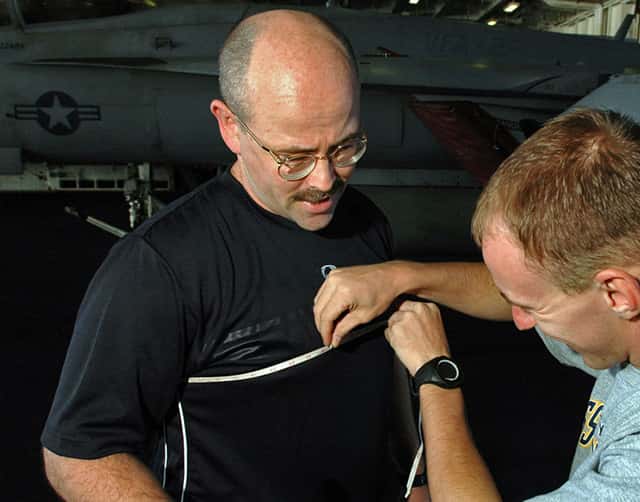
Measuring chest girth at the mid-sternum level
Reliability: Factors that may affect reliability include changes to the testing personnel, constant and even tension on the tape, and correct landmarking (finding the correct anatomical site for measurement).
Advantages: Low costs involved in the testing procedure.
Comments: Clothing over the site should be removed if possible to make sure measuring tape is positioned correctly and that the correct circumference is determined. Girth measurements combined with skinfold measurements can give a clearer picture of changes in tissue composition and distribution of muscle and fat. For this girth measurement, due to the location of the measure, care should be taken to maintain personal privacy of the subject, and sometimes it is appropriate to measure over clothing. If so, this should be recorded with the results.
What is a Good Chest Size for Athletes?
Athletic chest size varies significantly based on sport, body type, and training goals. Here are some general guidelines based on sports science research:
| Category | Men (inches) | Men (cm) | Women (inches) | Women (cm) |
|---|---|---|---|---|
| Average Adult | 38-42 | 97-107 | 34-38 | 86-97 |
| Athletic | 42-46 | 107-117 | 36-40 | 91-102 |
| Well-Developed | 46-50 | 117-127 | 38-42 | 97-107 |
| Elite Bodybuilder | 50+ | 127+ | 42+ | 107+ |
Ideal Chest Size Formulas
Several formulas have been developed to calculate ideal chest proportions for athletic physiques:
Steve Reeves Formula
Ideal Chest = Wrist × 6.5
Based on natural bodybuilding proportions from the pre-steroid era. A 7-inch wrist suggests a 45.5-inch ideal chest.
Height-Based Formula
Ideal Chest = Height × 0.55
Derived from anthropometric studies. A 70-inch tall person would have an ideal chest of 38.5 inches.
Chest-to-Waist Ratio
Ideal Ratio = 1.4:1
Your chest should be approximately 40% larger than your waist for the classic V-taper athletic appearance.
Sport-Specific Chest Standards
Different sports have varying optimal chest measurements based on performance requirements:
Bodybuilding: Maximum chest development is valued, with top competitors often exceeding 50 inches. Symmetry and proportion are judged alongside absolute size.
Swimming: Swimmers benefit from larger chest cavities for lung capacity. Elite male swimmers typically have chest measurements of 42-48 inches.
Powerlifting: Chest size contributes to bench press leverage. Larger chests can reduce range of motion, potentially improving lift performance.
Running/Endurance: Endurance athletes typically have smaller chest measurements (38-42 inches for men) as excess upper body mass can impair running economy.
Combat Sports: Chest size varies by weight class. Within each class, a well-developed chest contributes to punching power and defensive capability.
How to Improve Chest Measurements
For athletes looking to increase chest girth through training:
- Compound exercises: Bench press, dips, and push-ups form the foundation of chest development
- Progressive overload: Gradually increase weight or reps to stimulate muscle growth
- Adequate protein: Consume 1.6-2.2g protein per kg bodyweight to support muscle growth
- Rest and recovery: Allow 48-72 hours between intense chest sessions
- Consistency: Measurable changes typically require 8-12 weeks of consistent training
Frequently Asked Questions
What is a good chest measurement for men?
The average American male chest size is approximately 42 inches (107 cm). For athletes, a chest measurement 10-12 inches larger than your waist indicates good athletic proportions. Well-developed athletes typically measure 44-48 inches.
How do you measure chest girth accurately?
Measure at the level of the mid-sternum (breast-bone) with the tape passing horizontally under the arms. Take the reading at the end of a normal breath out, with arms relaxed at sides. Ensure the tape lies flat against the skin without being too tight or loose.
What is the ideal chest to waist ratio for athletes?
An ideal chest to waist ratio is approximately 1.4:1 for men, meaning your chest should be about 40% larger than your waist. This creates the V-taper appearance valued in physique sports. Women typically aim for ratios between 1.2:1 and 1.3:1.
Should I measure chest with muscles flexed or relaxed?
For standardized fitness testing, always measure relaxed at the end of normal expiration. Flexed measurements can be taken for tracking muscle development but should be recorded separately. Consistency in measurement technique is essential for tracking progress.
How can I calculate my ideal chest size?
Two validated methods exist: The Steve Reeves formula multiplies your wrist circumference by 6.5, while the height-based formula uses 55% of your height. Both provide naturally achievable targets. Use our calculator above to determine your ideal measurements.
How long does it take to increase chest size?
With consistent resistance training and proper nutrition, most athletes can expect to gain 1-2 inches of chest circumference in 3-6 months. Beginners may see faster initial gains, while advanced athletes progress more slowly. Genetics, training intensity, and nutrition all influence results.
References
- Norton, K., & Olds, T. (1996). "Anthropometrica: A Textbook of Body Measurement for Sports and Health Courses." UNSW Press.
- Reeves, S. (1995). "Building the Classic Physique: The Natural Way." Steve Reeves International Society.
- Stewart, A., et al. (2011). "International Standards for Anthropometric Assessment." ISAK.
- Marfell-Jones, M., et al. (2006). "International Standards for Anthropometric Assessment." International Society for the Advancement of Kinanthropometry.
- CDC/NCHS. (2004). "SizeUSA National Survey of Body Measurements." National Health Statistics Reports.
- Olds, T., & Honey, F. (2006). "The use of anthropometry in sports." Applied Physiology, Nutrition, and Metabolism.
Similar Tests
Related Pages
- General description of taking girth measurements, and links to other girth measures.
- A discussion about Body Size Testing
- Using MyoTape for girth measurement.
- Other anthropometric tests
- Videos of Anthropometric Tests
 Any comments, suggestions, or corrections? Please let us know.