


Absorbent Skin Patches for Sweat Collection & Analysis
The analysis of sweat composition can be used to provide insights into the health and fitness of athletes. Sweat can be collected for analysis from various parts of the body using absorbent sweat collection patches applied to the skin. Another method for collecting sweat samples is using Sweat collection pouches, or even whole body washdown.
purpose: to use sweat patches applied to the skin to collect a sample of sweat for analysis.
equipment required: absorbent sweat patches, razor, alcohol wipes, scales, centrifuge, sweat analyzer (or external laboratory).
pre-test: Explain the test procedures to the subject. Perform screening of health risks and obtain informed consent. Prepare forms and record basic information such as age, height, body weight, gender and test conditions. See more details of pre-test procedures.
measurement sites: Apply the sweat patch to an area of skin. There are many possible skin sites to use for sweat collection. The site used may depend on the purposes of testing. Commonly used sites are the upper back, chest, forearm, thigh and forehead. If standard sites are used, they need to be measured up and marked for correct placement.
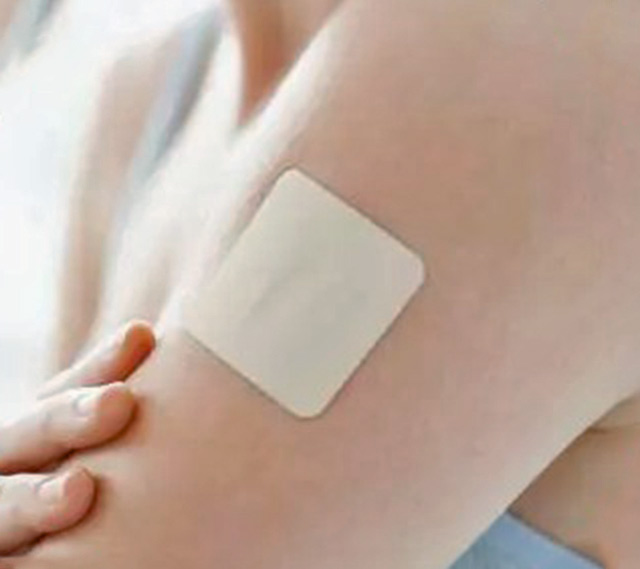 sweat collection patch applied to the skin
procedure: Prepare the skin by shaving any hair and clean with alcohol wipes and allow to dry. Record the weight of the small absorbent sweat patches. Place the patch on the skin. At the conclusion of the exercise protocol, the patches are removed and weighed. Place the patch in a centrifuge, a sample of the fluid is removed and the electrolyte content analyzed. If the analysis equipment is not available, some laboratories can do the analysis for you. (see also the sweat collection videos)
sweat rate results: for sweat rate analysis, the difference in weight of the patch before and after collection will give the volume of sweat collected. Divided by the time of collection, it will give a sweat rate value. If you know the area of collection, you can also calculate the rate per area of skin.
sweat composition results: Most commonly tested in sweat is the electrolyte content including sodium (Na), potassium (K), and magnesium (Mg2+). This is important as depletion of sodium, the primary electrolyte in sweat, can lead to muscle cramping.
interpretation: The results can be used to give feedback to the athlete to improve their hydration practices. Some people may be found to be 'salty sweaters', meaning they have high concentration of Na- in their sweat. These individuals may benefit from appropriate modification to their fluid and food intake for optimal electrolyte replacement. Research can also be performed to determine if sodium losses change throughout an endurance event, under different conditions and exercise intensities.
reliability: If the subject is to be retested, or athletes are being compared, accurate placement of the patches is very important for reliability. It is also important to standardize the testing conditions, so that the exercise intensity, duration, clothing, and environmental conditions are the same.
comments:
- The cost and requirement to send a sweat sample off for laboratory analysis makes this testing method more suitable for research purposes.
- Sweat patches are also used to test the levels of sweat chloride as a test for cystic fibrosis.
references:
- C Palaciosa, K Wigertza, B Martina, C.M Weavera, Sweat mineral loss from whole body, patch and arm bag in white and black girls. Nutrition Research. Vol 23, Issue 3, p401-411 (March 2003)
Similar Tests
- Sweat Loss Measurement — whole body fluid loss measurement using body weight changes.
- Sweat Monitoring — skin monitors to measure sweat rate and composition.
- Sweat Rate using patches — measurement of site-specific sweating rate.
- Whole Body-Washdown — method for whole body sweat collection.
- Urine color testing — assessing body hydration by looking at the color of urine.
- Urine specific gravity — using a refractometer to measure the density of urine.
Related Pages
- See this method in action on the sweat collection videos
- Sweat Analysis Methods
- Hydration for sport: a collection of articles
- Measuring dehydration
 Any comments, suggestions, or corrections? Please let us know.
 Current Events