


Tokyo, 1964 Olympic Games
The host of the 1964 Olympic Games was Tokyo, the capital city of Japan. Japan spent about $3 billion to rebuild Tokyo for the Olympics, revitalizing a city that had been devastated by earthquakes and World War II bombings. Tokyo are set to host the summer Olympics again in 2021.
The U.S. and U.S.S.R. ended up neck-and-neck on the medal tally, with the Soviets winning more medals overall, but the Americans winning more gold medals. See the medal table for 1964.
Athletes
- American Al Oerter won the discus throw for the third straight time, despite a cervical disc injury and torn rib cartilage.
- Ethiopian marathoner Abebe Bikila was the first man to successfully defend the marathon title (winning in 1960 and 1964). This time he won with less than six weeks after having his appendix removed. He only wore shoes for the second victory.
- Osamu Watanabe of the host country Japan won the freestyle featherweight division wrestling gold medal at Tokyo 1964, and did it in style by going through the competition without conceding a point, the only time an athlete has done so.
- Soviet gymnast Larissa Latynina won six medals for the third time in a row; she is second behind swimmer Phelps as the Olympic athlete with the most medals (she has 18).
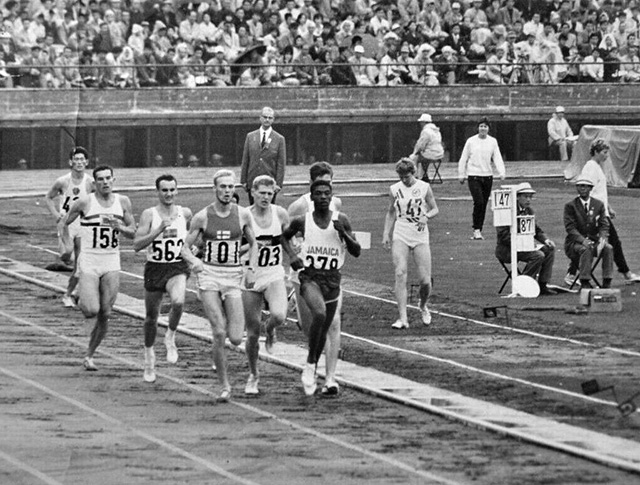 Tokyo Olympic Games 800m heat
Trivia
- Tokyo were selected to host the 1940 Olympics, however the start of World War II in 1939 forced the cancellation of the 1940 Games. This was after they had gone to the trouble of building a huge stadium.
- 25 Olympic and world records were broken in the course of the Games, and Japan's worldwide image got a significant boost.
- South Africa was banned by the IOC from taking part due to its oppressive apartheid regime. This ban lasted until 1992.
Related Pages
- List of sports at the 1964 Olympic Games
- About Tokyo 2021
- Medal table for 1964.
- About Japan at the Olympic Games.
- Nutrition and food service at the Tokyo Olympics
- About the canceled 1940 Olympics which was originally awarded to Tokyo.
- Tokyo 1964 Paralympic Games
- Complete list of Olympic host cities
- Videos from the 1964 Olympics
- 1964: Highlights of the Year in Sport
- Sport in Japan
 Any comments, suggestions, or corrections? Please let us know.
 Current Events