


The Science of Swimming
Sport science and medicine play a very important part in the performance of a swimmer. Science can maximize potential and help fine-tune the athlete, making small improvements in the swimmer's performance, which is often significant as just a few hundredths of a second can decide the result of races.
Did you Know?
Humans aren't the best swimmers; we can swim at 5 mph compared to a sailfish which can move through the water at 65 mph
The areas of the sport sciences that can be valuable to a swimmer include exercise physiology, biomechanics, sports psychology and sports medicine.
- Biomechanics & Physics — Sports Biomechanics is the application of physics and mechanics to the human body during sport. In such a technical sport such as swimming, it plays a very important in elite swimmers preparation and an important part in maximizing performance. See the articles on swimming biomechanics and hydrodynamics.
- Exercise Physiology — an exercise physiologist is invaluable for setting appropriate training and testing programs for the swimmer. See the articles on swimming fitness and fitness testing.
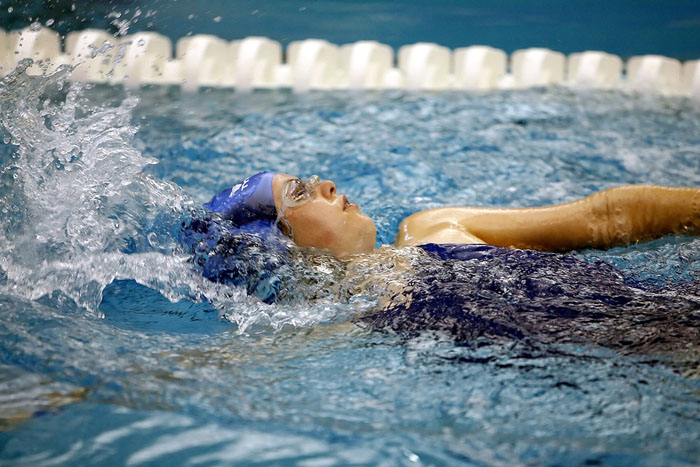 backstroke swimmer
Related Pages
- More information is available from the general pages of training, fitness testing, nutrition, biomechanics, and sports medicine.
- Do women have a physiological advantage in open water swimming?
- Swimming Strength training programs
- Guide to Learn Swimming for Beginners
 Any comments, suggestions, or corrections? Please let us know.
 Current Events