


Surfing Equipment - the surfboard
Today, most surfers use lightweight and speedy surfboards. Although they all may look very similar, the smallest change in shape can make them perform very differently. There are several key elements that affect the performance of each surfboard - length, thickness, tail shape, base shape, nose, leg rope and fins.
The elements discussed below are important to consider when choosing a board. For the best and most up to date advice, visit a reputable surfing shop.
see also the Malibu page.
Factors to Consider
- Length - Longer, wider boards catch waves more efficiently, while shorter, narrower boards are easier to turn and go faster.
- Thickness - A thicker edge of the surfboard (rail) makes the board easier to control but slower to turn. A hard thin rail is quicker in turns but can catch in the surf if used by a novice surfer.
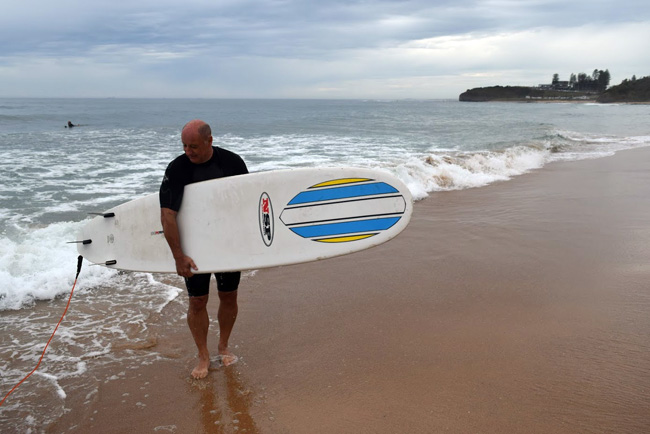 Balancing the board at the beach
- Tail Shape - Narrow tail boards cling to steep waves, while wider tails help the surfboard accelerate but are harder to control.
- Base Shape - Channels around the fins drive water underneath, which makes it faster.
- Nose - A wide nose is better for catching waves but a narrow nose is easier to ride in steep waves.
- Leg Rope - A leg rope comes standard with all boards, and is essential for when you fall off, so you don't have to swim back to shore each time.
- Fins - Variations in the number and size of the fins can make the board go faster and slower, and can affect handling.
Related Pages
 Any comments, suggestions, or corrections? Please let us know.
 Current Events